Jeju · Aug 6, 2026
Choosing a rental car in Jeju? Compare economy, sedan, SUV, van, and EV options by group size, luggage, and roads to pick the right car.

Jeju is one of Korea's best islands to explore by car, but the first decision comes before you drive anywhere: which type of rental car to book. The right choice depends on your group size, luggage, the roads you plan to take, and how comfortable you are with a new car in an unfamiliar place.
This guide compares the main rental car classes available in Jeju, from compact city cars to SUVs, vans, and electric vehicles, so you can match the car to your trip with confidence. It uses public Korea Tourism Organization (KTO), Visit Jeju, and Korean road law resources.
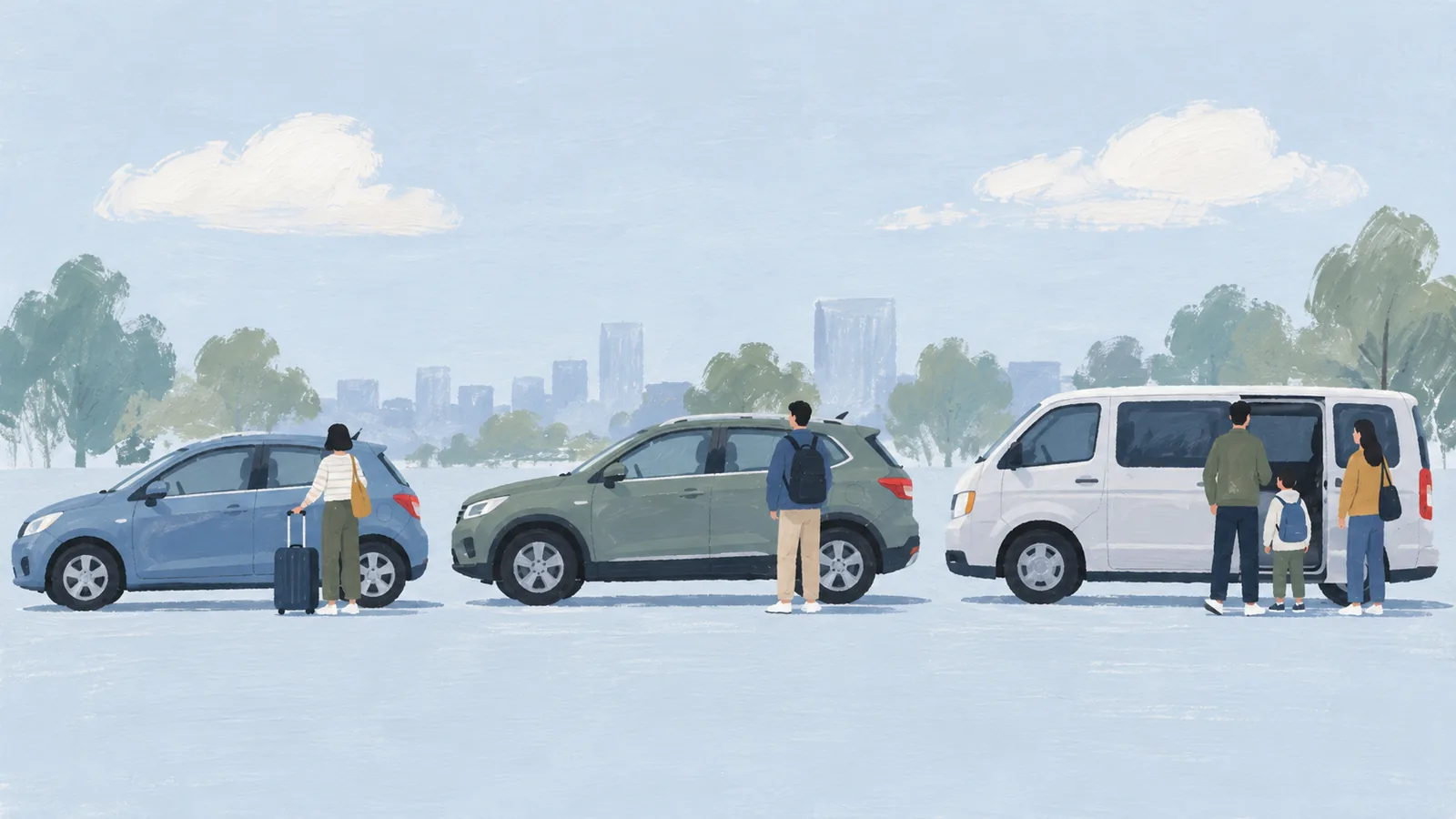
Most Jeju rental fleets are grouped into a few familiar classes. Knowing what each is good for makes the rest of the decision easy.
Use this quick comparison to narrow your choice before you book.
| Car class | Typical seats | Luggage | Best for |
|---|---|---|---|
| Economy / compact | 4 | 1 to 2 cases | Solo or couple, city and coast |
| Midsize sedan | 5 | 2 to 3 cases | Couples, small groups, comfort |
| SUV | 5 | 3 to 4 cases | Mountain roads, more luggage |
| Van / people mover | 7 to 9 | 5 or more cases | Families and larger groups |
| Electric vehicle | 4 to 5 | 2 to 3 cases | Low running cost, short hops |
Size the car for the airport transfer, when every traveler and every bag will be inside at once. A compact car can suit light packers, while a midsize SUV gives more flexibility for a stroller or several hard cases. A minivan is often the practical choice when most seats are occupied, but you should still confirm the exact model and seating configuration.
Jeju is compact and most coastal and city roads are well paved, so a compact or sedan handles the island comfortably for everyday sightseeing. You do not need an SUV just to drive around Jeju.
If you plan to cross the island over Hallasan, the two main mountain roads are worth knowing. The Korea Tourism Organization describes the 5.16 Road as Jeju's first national highway, and Road 1100 climbs to a high plateau with curves and changing weather. A sedan is fine in normal conditions, but an SUV can feel steadier on long inclines and gusty stretches.
In old town areas and near popular spots, parking can be tight, so a smaller car is easier to maneuver and park. Our Jeju parking guide covers where and how to park.
Jeju has invested heavily in electric mobility and has one of Korea's densest public charging networks, which makes an EV a practical choice for most itineraries. Running costs are low and the drive is quiet and smooth.
Plan your charging stops in advance and check the car's range against your daily route, especially if you head into the mountains. Our Jeju EV rental charging guide explains where to charge and how to plan.
Korean road law (Road Traffic Act) requires drivers to secure young children with an appropriate child restraint, so reserve car seats when you book. See our Jeju child seat guide for sizes and setup.
For families or groups of five or more, an SUV or van keeps everyone and the luggage comfortable. Confirm seat count and child seats early, and read our Jeju airport pickup guide so collection goes smoothly.
Start with the bulkiest item, usually a stroller or large suitcase. Seat count alone can be misleading because a child seat reduces usable rear-seat space.
| Travel group | Practical starting point | Check before booking |
|---|---|---|
| 2 adults + 1 child | Compact SUV | Stroller fit with all bags |
| 2 adults + 2 children | Midsize SUV | Two child seats and trunk width |
| 4 adults + children | Minivan or large SUV | Third-row access and luggage space |
For one or two travelers, an economy or compact car is easy to drive and park. Families and groups are more comfortable in an SUV or van, while an EV suits travelers who want low running costs.
No. Most coastal and city roads are well paved, so a compact or sedan is fine for everyday sightseeing. An SUV mainly helps on long mountain inclines and with extra luggage.
Yes. Jeju has one of Korea's densest charging networks, so an EV works for most itineraries. Plan charging stops and check the car's range against your daily route.
Families of four can use an SUV for comfort and luggage. Groups of five or more usually need a van or people mover. Reserve child seats when you book, as Korean law requires restraints for young children.
A compact car fits one or two suitcases comfortably. For three or more large cases, choose a sedan, SUV, or van so the trunk and rear seats are not crowded.
Usually not comfortably. The center and rear seats may be fully occupied, leaving only the trunk. Confirm the exact model and luggage dimensions before booking.
It may provide very little cargo room with the third row upright. For seven travelers with full-size luggage, compare a minivan or arrange a larger vehicle.
No. It is useful for larger groups, multiple child seats, or bulky luggage, but it can cost more and feel less convenient in tight parking areas.
Official sources used: KTO 5.16 Road, Visit Jeju Road 1100, Korea Road Traffic Act Article 50.
If you want a Jeju rental with clear pricing and the right car for your trip, compare foreigner-ready options with Orcar. Orcar
This article includes images created with AI for illustration.
Find a car for your trip
Explore CarsJeju · Aug 6, 2026
Jeju · Aug 4, 2026
Jeju · Jul 30, 2026