
Jeju · Aug 6, 2026
Refueling a Jeju rental car? Learn how to use a Korean self-service gas station, choose the right fuel, pay at the pump, and avoid costly mistakes.

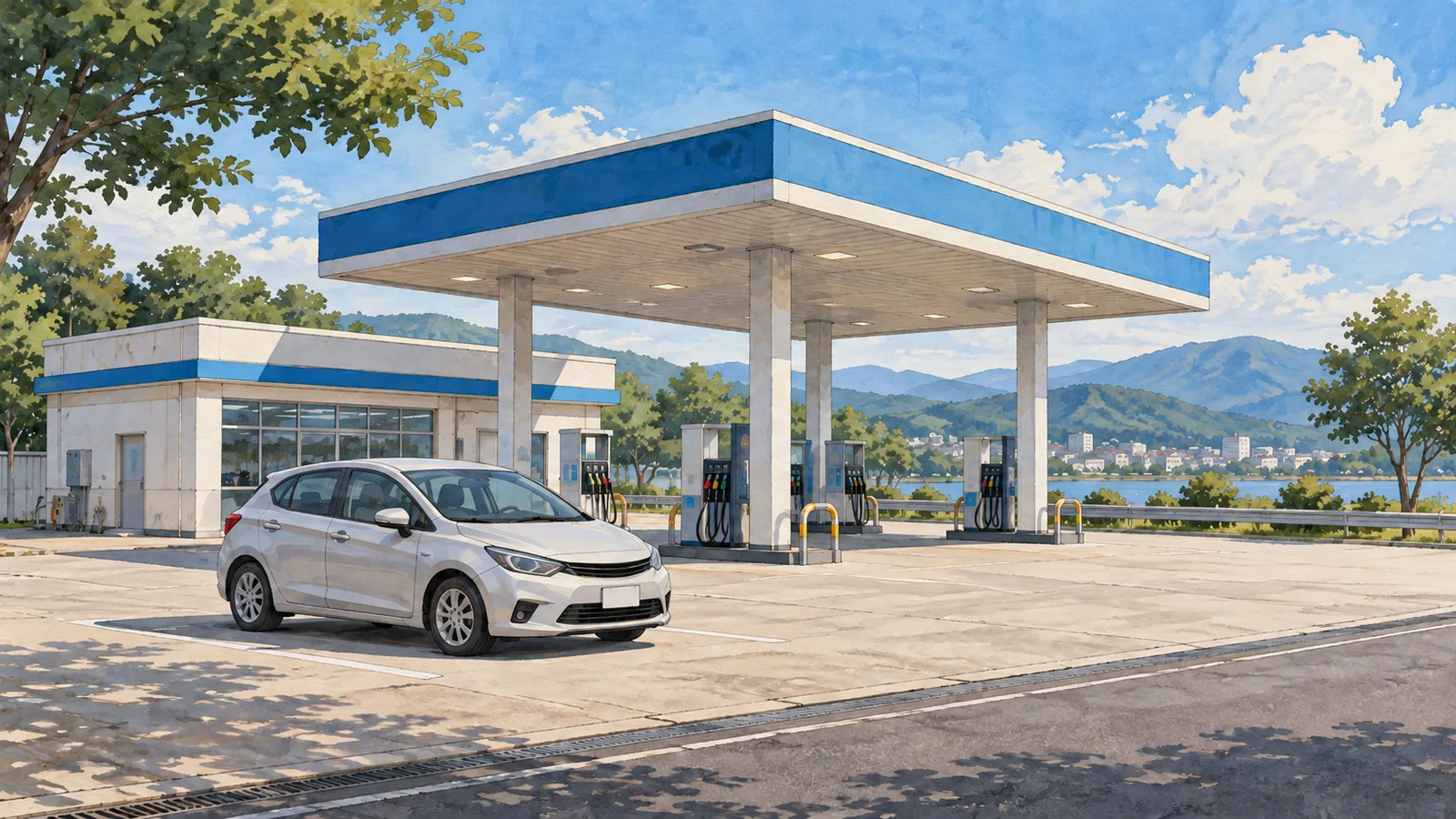
Renting a car is the easy part of a Jeju trip. The moment that catches many international travelers off guard is the first fill-up, where the screen is in Korean and you are not sure which fuel to pick. This guide walks you through how to refuel a rental car in Korea step by step, how to choose the right fuel, how to pay, and how to avoid the one mistake that gets expensive.
Korean gas stations come in two types. A self-service station is marked with the word 셀프 (self), which means you pump the fuel yourself and usually pay a little less per liter. A full-service station has an attendant who fills the car for you while you stay inside.
Either type works for a rental car. Self-service stations are common across Jeju and often cheaper, so it helps to know the simple steps before you pull in.
This is the one thing to get right. Most rental cars in Korea run on gasoline, shown on the pump as 휘발유. Some are diesel, shown as 경유. A few special vehicles use LPG, and electric cars charge instead of refuel.

Putting the wrong fuel in the tank can cause serious engine damage, and your rental agreement usually makes you responsible for the repair. Before you fill up, confirm your car's fuel type on the label inside the fuel door and on your rental contract. If you are not sure, ask your supplier before you leave the pickup point.
The screens are mostly in Korean, but the flow is the same as anywhere. Many machines have a language button if you look for it.
Most self-service pumps accept credit and debit cards, and international Visa and Mastercard are widely usable. A few older machines are cash only or expect a Korean membership card, so keep some cash as a backup.
Tell your bank you will use the card abroad so the payment is not blocked for unusual activity, and check whether the card can be charged in Korean won. For Orcar rentals, return the car with the same fuel level as at pickup. See our fuel policy guide below for the details.
Fuel prices change daily and vary by station and brand. Opinet, the official price site run by the Korea National Oil Corporation, shows live average prices for gasoline, diesel, and LPG and helps you find the cheapest station near you. In mid-2026 the national average for gasoline was around 2,000 won per liter. Check Opinet for the current rate.
In Jeju, stations are easy to find in Jeju City and along main roads, but they can be sparse in rural eastern areas and the mountain routes, and some close at night. Top up before heading somewhere remote, and refuel before an early return to the airport so you are not searching for an open station with a flight to catch.
Most fuel disputes are easier to prevent at pickup than to solve at return. Before leaving the rental office, take photos of:
Visit Jeju recommends taking photos of the vehicle as proof of condition and noting the fuel level. This small step gives you a clear reference if the gauge looks ambiguous when you return the car.
Combustion cars look simple, but return-day timing can create surprise costs. Gas stations near Jeju Airport can be busy, and leaving refueling until the final 30 minutes can conflict with shuttle and flight timing.
For Orcar rentals, return the car with the same fuel level as at pickup. Compare the current gauge with your pickup photo. Keep the receipt after refueling and allow for the short drive from the gas station to the return location.
Orcar is built around transparent pricing, so the price you see is the price you pay, with no surprise fees at the counter. Multilingual support lets you ask about fuel, insurance, and pickup in your own language before you commit.
Before your trip, review your Jeju rental car fuel policy, and if you booked an electric car, read our Jeju EV charging guide instead. New to renting in Jeju? Start with the foreigner rental checklist.
Most rental cars in Korea are gasoline (휘발유), but some are diesel (경유). Check the label inside the fuel door and your rental contract, and ask the supplier if you are unsure. Using the wrong fuel can be expensive to fix.
Usually yes at self-service pumps for Visa and Mastercard. Keep some cash as a backup, since a few machines are cash only or expect a Korean membership card, and tell your bank you will use the card abroad.
It means self-service. You pump the fuel yourself and usually pay a little less per liter than at a full-service station, where an attendant fills the car for you.
Use Opinet (opinet.co.kr), the official Korea National Oil Corporation price site, or its app, to compare live prices for gasoline and diesel and find nearby stations.
Call the 1330 Korea Travel Hotline at +82-2-1330, which offers support in several languages, and contact your rental supplier. In an emergency, dial 112 for police or 119 for fire and ambulance.
For an Orcar rental, return the car with the same fuel level it had when you picked it up (usually full). If the tank is short, a refueling fee may be charged after the return is reviewed. Visit Jeju and LOTTE RENT-A-CAR also emphasize returning the car with the same fuel level as pickup.
Yes. It can help prove recent refueling if the return fuel gauge is unclear or if the rental office asks for confirmation.
It can be, but airport-area timing can be tight. Refuel or charge before the final airport stretch when possible, especially during peak return hours.
This article includes images created with AI for illustration.
Find a car for your trip
Explore CarsJeju · Aug 6, 2026
Jeju · Aug 4, 2026

Jeju · Jul 30, 2026