
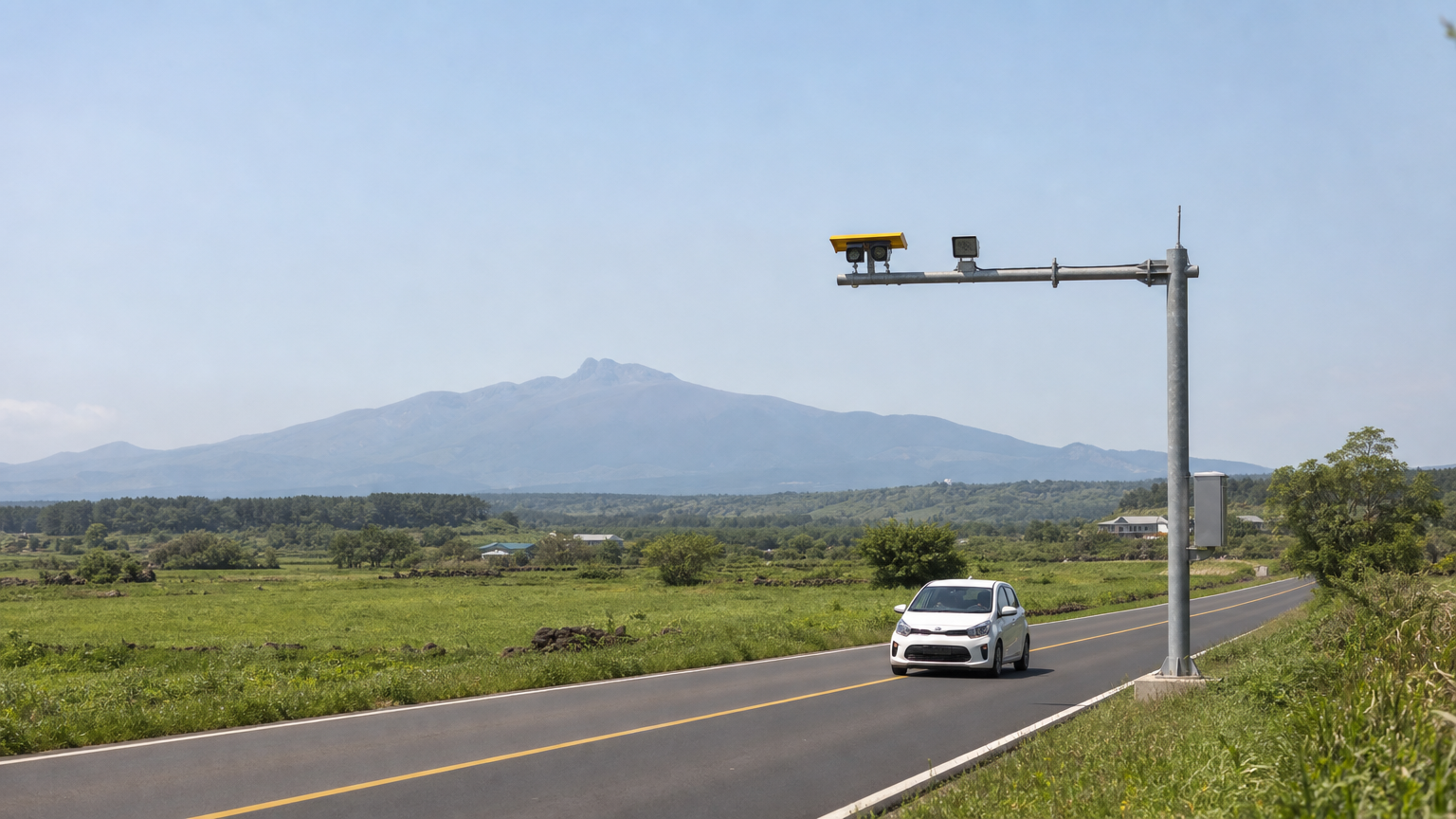
You returned the car, flew home, and weeks later you hear about a speeding fine from your Jeju trip. It feels confusing, but the process behind it is consistent and easy to understand once you know how Korea handles traffic violations for rental cars.
This guide explains how a speed camera fine actually reaches a foreign renter, the two types of penalties you might see, how to check and pay on the official police portal, and how to avoid fines in the first place.
How traffic fines work for rental cars in Korea
Most fines that tourists get in Jeju come from unmanned (automated) cameras, mainly speed cameras and red light cameras. When a camera records a violation, the system identifies the vehicle by its license plate, not the driver.
Because the camera cannot confirm who was driving, Korean law lets the authority impose the penalty on the registered owner of the vehicle when the actual driver cannot be identified. For a rental car, the registered owner is the rental company, and the law specifically includes companies that lease or rent out vehicles in this rule (Road Traffic Act Article 160).
So the first notice does not go to you. It goes to the rental company. What happens next is where renters get confused.
Administrative fine vs penalty: the two terms you will see
Korea has two different things that both look like a "fine," and the difference matters:
- Administrative fine (gwataeryo, 과태료): A non-criminal monetary penalty. This is what gets issued for camera-caught violations when the driver is not identified, and it can be placed on the vehicle owner. This is the one rental drivers usually deal with.
- Penalty (beomchikgeum, 범칙금): Issued to a specific, identified driver, for example when a police officer stops you directly. It can carry license penalty points for a Korean license holder.
For a tourist caught by a speed camera, the outcome is almost always an administrative fine tied to the vehicle, not a personal penalty on the spot.
How a speed camera fine reaches you as a renter
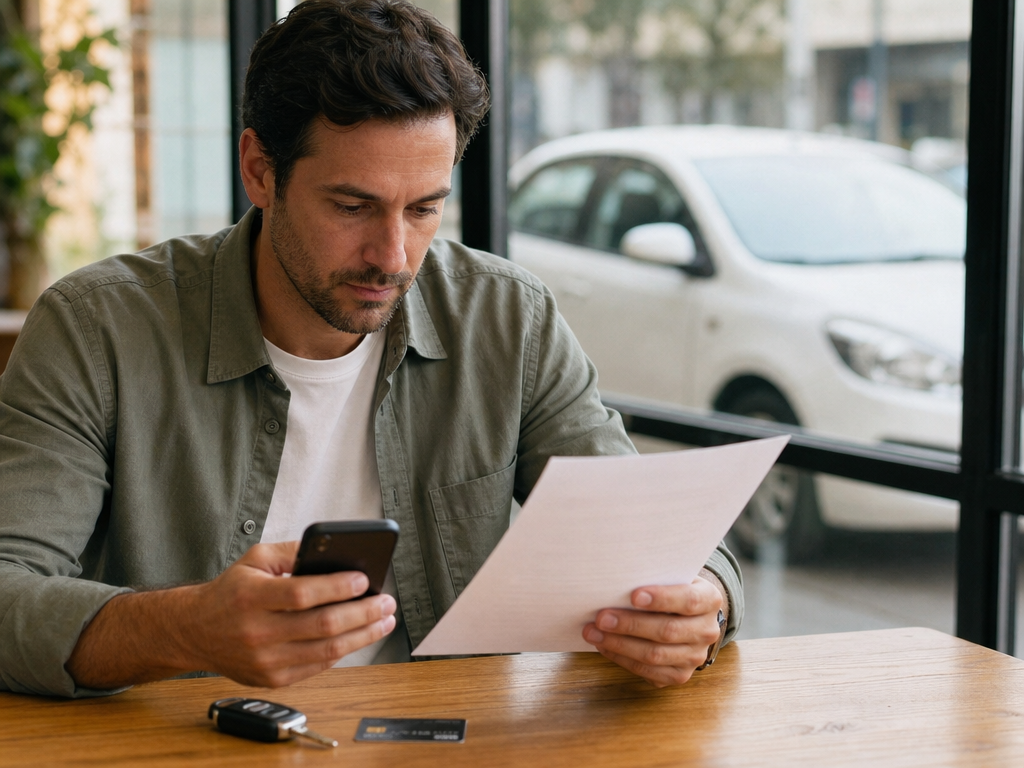
Here is the typical chain of events:
- The camera records the violation and a notice is sent to the rental company as the registered owner.
- Korean law lets the rental company be released from the administrative fine when it is clear the car was simply rented out (Road Traffic Act Article 160). The company then identifies the actual driver from the rental record.
- The police traffic portal (eFINE) even has a dedicated "rental car violator change" function so the company can register the renter as the responsible party.
- From there, the renter becomes responsible for the fine. Rental contracts also commonly authorize the company to recover an unpaid fine, and sometimes an administrative handling fee, using the card or deposit on file.
Exact recovery practice varies by company, so read your rental agreement. If you want to understand the card hold and deposit side, see our Jeju rental deposit guide.
How to check and pay a Korean traffic fine
The official channel is eFINE (efine.go.kr), run by the Korean National Police Agency. On eFINE you can check recent camera enforcement, view the official notice, pay traffic penalties and administrative fines online, and file an objection.
A few practical points for foreign visitors:
- The portal is built for Korean identity verification, so logging in from abroad can be difficult. In practice, many travelers settle the fine through the rental company instead.
- An administrative fine is generally due within 60 days of receiving the notice. You can also file an objection within 60 days if you believe it is wrong.
- Paying early during the pre-notice opinion period can qualify for a reduction of up to 20 percent (voluntary early payment).
- Leaving it unpaid adds a surcharge (starting at 3 percent) and can grow with further monthly surcharges, so do not ignore a notice.
How to avoid fines in the first place
The simplest fix is to drive within the posted limits. Jeju enforces speed cameras strictly, and many are clearly marked, so your navigation app will usually warn you.
- Use Kakao Map or Naver Map for driving. Both announce upcoming speed cameras.
- Watch for school zones, where limits drop to 30 km/h and fines are higher.
- Slow down well before a camera, not right at it, since some measure average speed over a section.
For the full set of rules that surprise visitors, read our Korean traffic laws guide. And if anything more serious happens on the road, our rental car accident guide walks you through the steps.
Rent with clear, multilingual support
Surprise charges are the number one complaint in car rental, and fines handled in a language you do not read make it worse. Orcar works with vetted local partners and gives you multilingual support, so if a fine notice does come up, you have someone to explain it. See how we keep bookings transparent in our booking trust checklist, or book your Jeju rental car on Orcar.
FAQ
Will I really get charged for a speed camera ticket after I leave Korea?
Yes, it is possible. The camera identifies the car, the notice goes to the rental company, and the company can register you as the driver and recover the fine through your contract. It does not disappear because you flew home.
Is a speed camera fine a criminal record?
No. A camera-caught violation is normally an administrative fine, which is a non-criminal monetary penalty. It is not a criminal conviction.
How much time do I have to pay?
An administrative fine is generally due within 60 days of receiving the notice. You can also object within 60 days. Paying early may reduce the amount, while ignoring it adds surcharges.
Can I check my fine myself?
The official portal is eFINE (efine.go.kr) from the Korean National Police Agency. It is built for Korean identity verification, so foreign visitors often handle the fine through the rental company instead.
What if I think the fine is a mistake?
You can file an objection within 60 days of receiving the notice. Keep your rental dates and any evidence, and ask your rental company or check eFINE for the formal process.