
Korea Rental Car Accident Guide for Travelers
A rental car accident in Korea can feel confusing, especially if you do not speak Korean or you are not sure how insurance works. The safest approach is simple: protect people first, contact the right emergency number, document the scene, and report the accident to the rental company before you agree to anything.
This guide is written for foreign travelers renting a car in Korea, including Jeju. It is practical travel guidance, not legal advice.
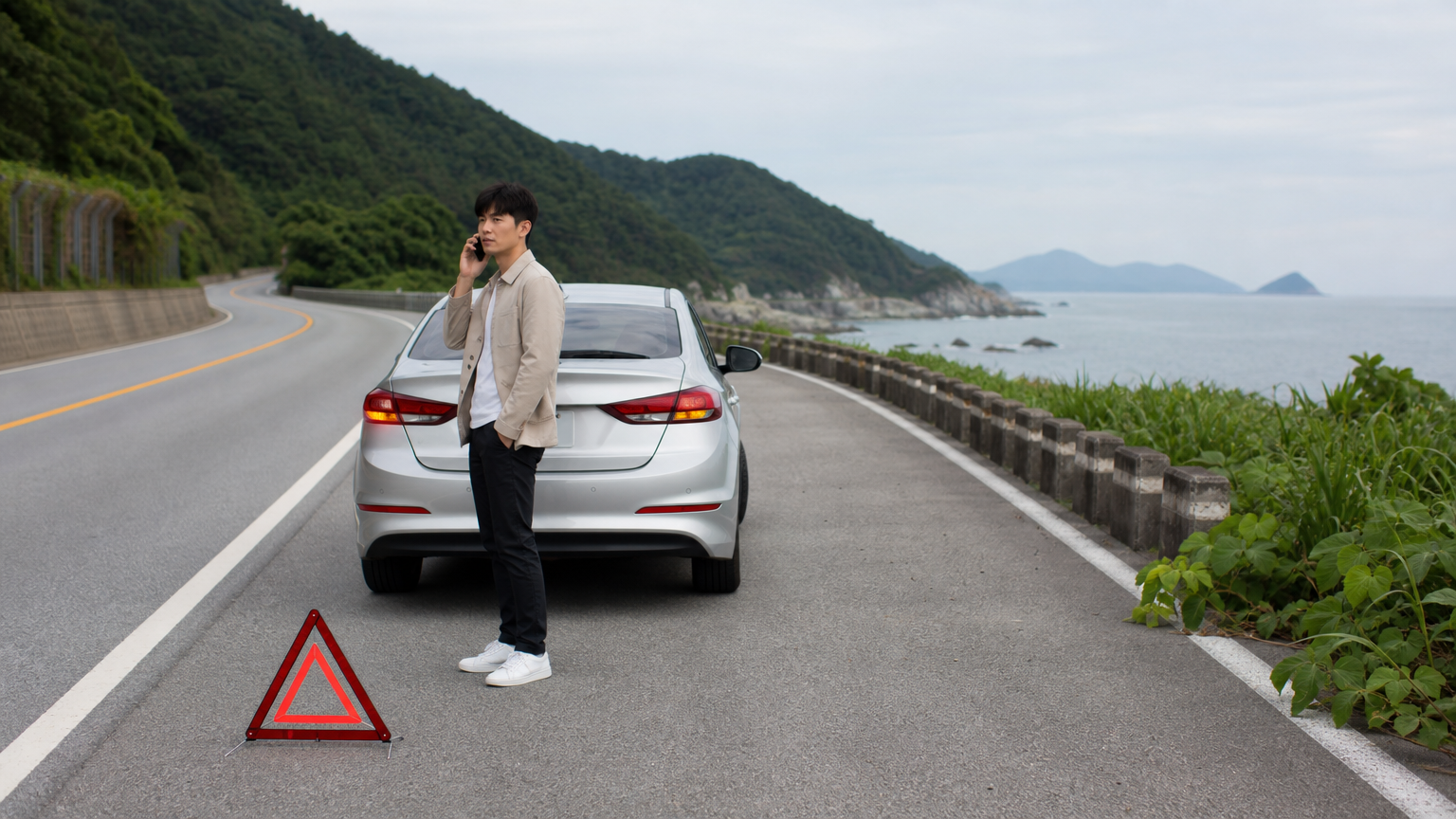
Quick answer: what to do first
If you are involved in a rental car accident in Korea:
- Stop, check for injuries, and move to a safe place if there is risk of a secondary accident.
- Turn on hazard lights and use warning signs if safe to do so.
- Call 119 for fire, ambulance, or medical emergencies.
- Call 112 for police help, especially if anyone is injured, the road is blocked, fault is disputed, or your rental company asks for a police report.
- Call your rental company or booking support before making any payment or private agreement.
- Photograph the scene, vehicle positions, license plates, road signs, and all damage.
- Use 1330 Korea Travel Hotline if you need interpretation support.
Korea Tourism Organization lists 112 for police, 119 for fire and medical emergencies, and 1330 for multilingual travel help. Korea's national safety guidance also emphasizes moving to safety, preventing secondary accidents, and avoiding unnecessary movement of injured people unless there is immediate danger.
Your first 10 minutes after the accident
1. Make people safe before thinking about the car
Check yourself, passengers, the other driver, and pedestrians. If anyone may be injured, call 119. Do not move an injured person unless there is immediate danger such as fire.
If the vehicle can be moved safely and staying in place creates another danger, move it to the shoulder or another safe area. If moving the vehicle may affect the accident record, take quick photos first if it is safe. Use hazard lights, open the trunk, and place a warning triangle if you can do so without standing in traffic.
2. Call the right number
| Situation | Number to call | Why it matters |
|---|---|---|
| Injury, medical emergency, fire, trapped passenger | 119 | Fire and emergency medical response |
| Police help, disputed accident, road blockage, hit and run | 112 | Police reporting and scene support |
| Language barrier during travel | 1330 | Korea Travel Hotline with multilingual support |
| Rental car damage or insurance process | Rental company emergency contact | Required for rental and insurance handling |
If you do not know your exact location, use your map app, nearby road signs, landmarks, or the rental car navigation screen. A simple phrase can help: "Traffic accident. I am a foreign traveler. English, please."
3. Avoid private settlement pressure
Do not admit fault, promise payment, sign documents you do not understand, or agree to an on-the-spot cash settlement. Stay factual and let the police, rental company, and insurance provider handle the process.
This is especially important in a rental car because the car owner is the rental company, not you. Even minor scratches may need to be reported through the rental company's process.
What to document at the scene
Good documentation reduces confusion later. Take more photos than you think you need.
Photo checklist
- Wide photos of the full scene from several angles
- Vehicle positions before anything changes, if safe
- License plates of all vehicles involved
- Close photos of every damaged area
- Road signs, traffic lights, lane markings, and intersections
- Weather, road surface, debris, skid marks, or obstacles
- Rental car dashboard warning lights, if any
- The other driver's insurance information, if shared
- Your rental agreement and car condition photos from pickup
Information to collect
Ask for the other driver's name, phone number, license plate, and insurance company. Share your rental car information and your contact information, but avoid giving unnecessary personal documents to bystanders.
If there are witnesses, politely ask whether they are willing to share a phone number. If not, do not pressure them.
Rental car insurance: what the accident may trigger
Rental car insurance in Korea often has exclusions and conditions. The exact terms depend on the rental company, vehicle, insurance option, driver registration status, and accident details.
| Item to check | Why it matters |
|---|---|
| Registered driver | Coverage may apply only to drivers listed in the rental contract. |
| CDW or damage waiver level | It affects your deductible and covered damage. |
| Tire, wheel, mirror, glass coverage | These are sometimes excluded from basic coverage. |
| Loss-of-use fee | Some rental companies charge for days the vehicle cannot be rented while being repaired. |
| Police or accident report requirement | Some claims may require formal documentation. |
| Rental company reporting deadline | Late reporting can create coverage problems. |
If you booked through Orcar, contact Orcar support or the partner rental company's emergency contact as soon as the scene is safe. Keep the conversation inside official support channels where possible so instructions are documented.
For more detail on coverage terms, read our related guide: CDW in Jeju Rental Cars: What It Covers.
Before pickup: prepare for emergencies in 5 minutes
The best accident plan is made before you drive away from the rental lot.
- Save 112, 119, 1330, and the rental company emergency number.
- Screenshot your booking confirmation and insurance option.
- Confirm who is registered as a driver.
- Take pickup photos of all sides of the car, wheels, windshield, mirrors, and fuel or battery level.
- Check whether the car has a dashcam and how to preserve footage if needed.
- Download a translation app and offline map.
- Keep your passport, license, and International Driving Permit ready.
Jeju-specific notes for foreign travelers
Jeju is a popular self-drive destination, but travel days can be busy around the airport, shuttle lots, coastal roads, and tourist parking areas. Minor parking lot scratches and low-speed contact can still create stress if the process is unclear.
For Jeju trips, check the pickup instructions before arrival and save the rental counter or shuttle contact number. If your first driving segment is from Jeju Airport, leave extra time so you do not rush through the car condition check. Our Jeju Airport Car Rental Pickup Guide explains the pickup flow for travelers.
If you are still checking whether your license is valid in Korea, read Can I Drive in Korea? IDP Guide before booking.
FAQ
Do I always need to call the police after a rental car accident in Korea?
Call 112 if anyone is injured, the road is blocked, there is disagreement, another party leaves, public property is damaged, or your rental company asks for police documentation. For very minor damage, your rental company may guide the next step, but when in doubt, call 112 and follow official instructions.
What if I do not speak Korean?
Use 1330 Korea Travel Hotline for multilingual travel assistance. You can also ask the 112 or 119 operator for English support. Keep your location visible on a map app so you can describe where you are.
Should I move the rental car after the accident?
People's safety comes first. If the vehicle is creating immediate danger and can be moved safely, move it to a safer area after taking quick photos if possible. If there are injuries, serious damage, or uncertainty, follow police or emergency instructions.
Can I pay the other driver directly and leave?
Avoid private cash settlement, especially with a rental car. Report the incident to the rental company and follow the official process. Paying directly may make insurance handling harder later.
What happens if the accident was not my fault?
Still document everything, call the necessary emergency numbers, and report the accident to the rental company. Fault and compensation should be handled by the police record, rental company, and insurance providers, not by roadside negotiation.
Will CDW cover every cost?
Not always. CDW terms vary and may exclude certain parts, unregistered drivers, single-vehicle incidents, loss-of-use fees, or specific types of damage. Check your rental terms before pickup and contact support if anything is unclear.
Final checklist
Before you drive in Korea, save this checklist:
- 112: police
- 119: fire and medical emergency
- 1330: multilingual Korea Travel Hotline
- Rental company emergency number
- Booking confirmation and insurance option
- Pickup photos and driver registration details
A rental car accident abroad is stressful, but a clear process helps. Protect people first, use official channels, document carefully, and report the accident through the rental company before making decisions.