
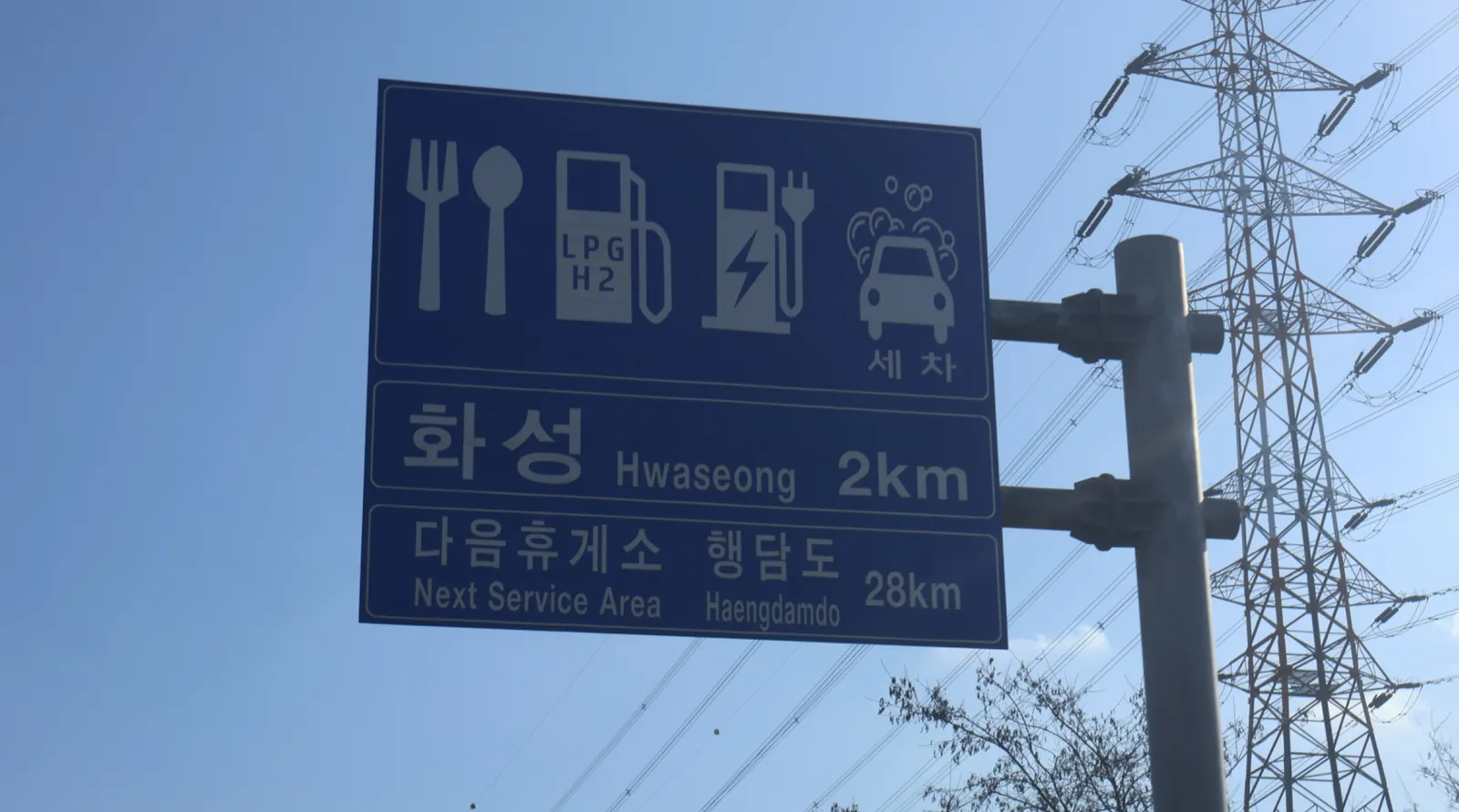
Sources used for this guide: VISITKOREA driving guide, VISITKOREA Deokpyeong Eco-Service Area, and Korea Expressway Corporation rest area facility data.
Why rest areas matter on a Korea rental car trip
Korea is a strong self-drive country for travelers who want to connect airports, smaller cities, islands and mountain regions. VISITKOREA explains that the country is densely connected by highways and well-paved national routes, and that a car is useful for places where public transportation is less convenient.
That convenience works best when you treat expressway rest areas as part of the itinerary. They are where you can reset, use clean facilities, refuel, check the route and let passengers take a real break before the next long section.
This guide is for travelers renting a car in Korea and planning intercity drives such as Seoul to Gangneung, Incheon Airport to Jeonju, Busan to Gyeongju or a longer mainland road trip before or after Jeju.
What Korean expressway rest areas usually offer
A Korean expressway rest area is usually more than a bathroom stop. The Korea Expressway Corporation public data portal lists facility categories such as nursing rooms, sleeping rooms, showers, laundry rooms, local product shops, hospitals, pharmacies, rest spaces and barber shops across highway rest areas.
Not every rest area has every facility. Before a long drive, use a Korean map app to check the next rest area and confirm whether it has fuel, EV charging, a food court, a convenience store or a child-friendly facility.
VISITKOREA describes Deokpyeong Eco-Service Area as a rest area with food, souvenirs, a garden, flowers, trees, sculptures and parking. That is a good example of why Korean rest areas can work as short itinerary stops, not only as emergency breaks.
How to time your stops
For most travelers, the safest rhythm is to stop before everyone is tired. Plan a rest area every 90 to 120 minutes on highway days, and earlier if you are driving after a flight, in rain, at night or with children.
A simple rule works well: fuel before the tank is low, eat before the group is too hungry and use the bathroom before entering a city section. This prevents rushed lane changes and last-minute exits.
If you are driving to a timed activity, choose the rest area before the final destination. It is easier to arrive refreshed than to look for parking, bathrooms and snacks at a crowded tourist site.
Tolls, Hi-pass and lane choice
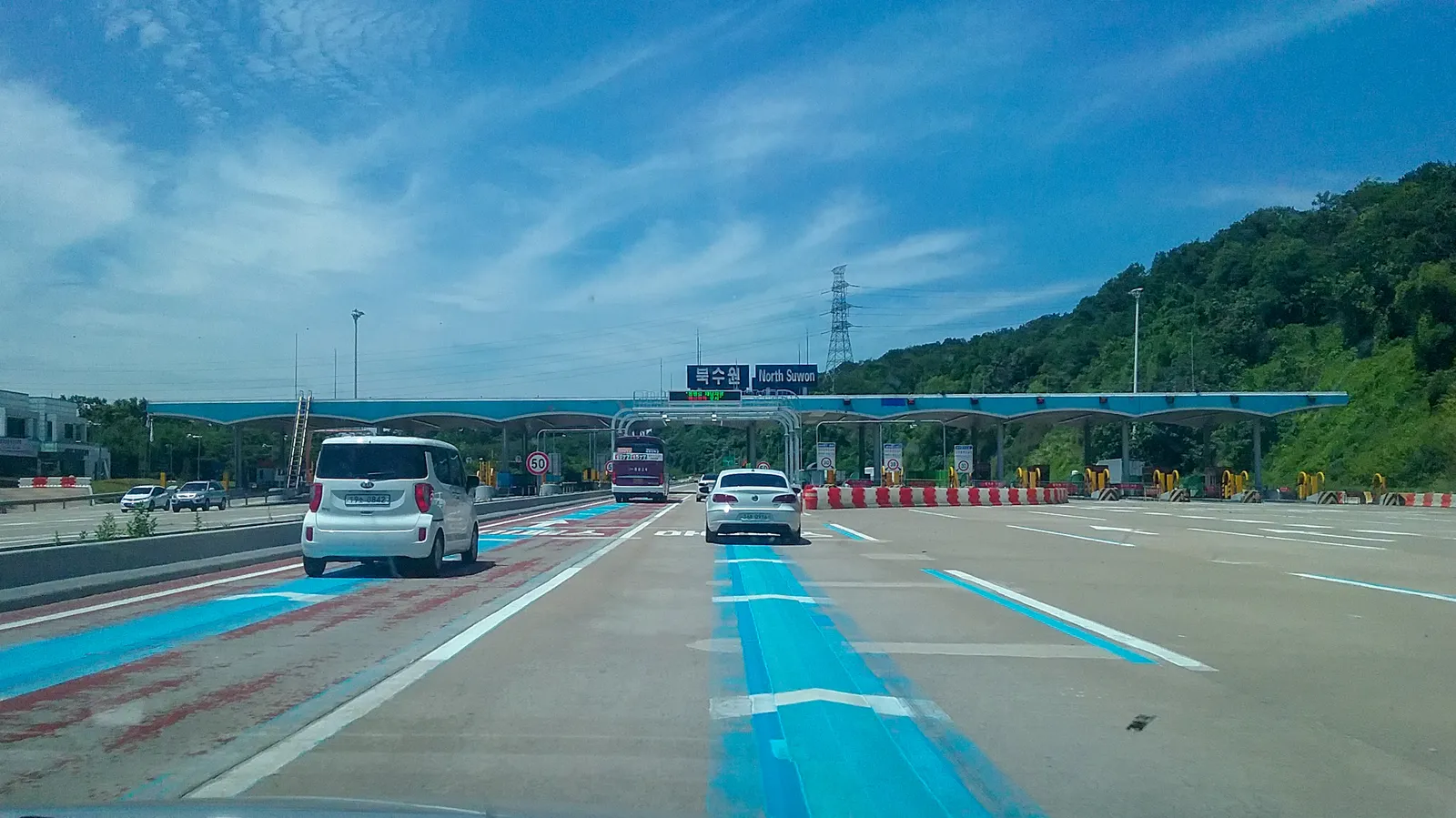
VISITKOREA explains that highway tolls in Korea can be paid directly to a tollgate employee or automatically with a Hi-pass device installed in the car. Hi-pass lanes are usually marked in blue.
Before leaving the rental lot, ask whether the car has a Hi-pass device and how tolls are billed. Some rentals charge tolls later, while others may ask you to pay at the counter or settle during return.
If your rental car does not have Hi-pass, do not enter a Hi-pass-only lane. VISITKOREA says that if you accidentally use a Hi-pass lane, you should note the tollgate name and explain it to an employee at the exit tollgate so it can be processed.
Food, parking and passenger comfort
Rest area food can be part of the trip. Look for clear menu photos, simple dishes, snacks, coffee and local products. If the food court is crowded, split the stop into tasks: one person orders food, another uses the bathroom, and the driver checks the next route.
Park where you can leave safely without reversing into heavy pedestrian flow. Take a photo of the parking zone or nearby sign, especially at large rest areas where several buildings and fuel stations look similar.
Do not leave passports, wallets, phones, cameras or rental documents visible in the car. Put shopping bags and jackets in the trunk before entering the rest area, not after people are already watching the vehicle.
Useful internal guides for the same trip
If your route includes toll roads, read the Korea rental car toll and Hi-pass guide before you drive.
For refueling basics, keep the Korea gas station and refueling guide nearby. The same self-service habits are useful on mainland highway routes.
If you are still deciding whether to rent a car, start with the driving in Korea IDP guide and the navigation app guide.
FAQ
Are Korean expressway rest areas easy for foreign drivers to use?
Yes. The layout is usually straightforward, and many stops have food courts, convenience stores, bathrooms and fuel. A Korean navigation app helps because English signs and translated place names can vary.
How often should I stop on a Korea highway drive?
Plan a stop every 90 to 120 minutes, or sooner if you are tired, driving at night, carrying children or adjusting after a flight.
Can I use Hi-pass in a rental car in Korea?
Only if the rental car has a Hi-pass device and the rental company explains how the tolls will be billed. Confirm this before leaving the rental lot.
What should I not leave in the rental car at a rest area?
Do not leave passports, wallets, phones, cameras, rental documents or visible shopping bags in the cabin. Keep valuables with you.
Are rest areas useful on short day trips?
Yes. Even on a two-hour drive, a planned rest area stop can solve bathrooms, coffee, snacks, fuel and route checks before the final destination.